

Using the 4K Upscaler for Ultra-Detailed Finishes
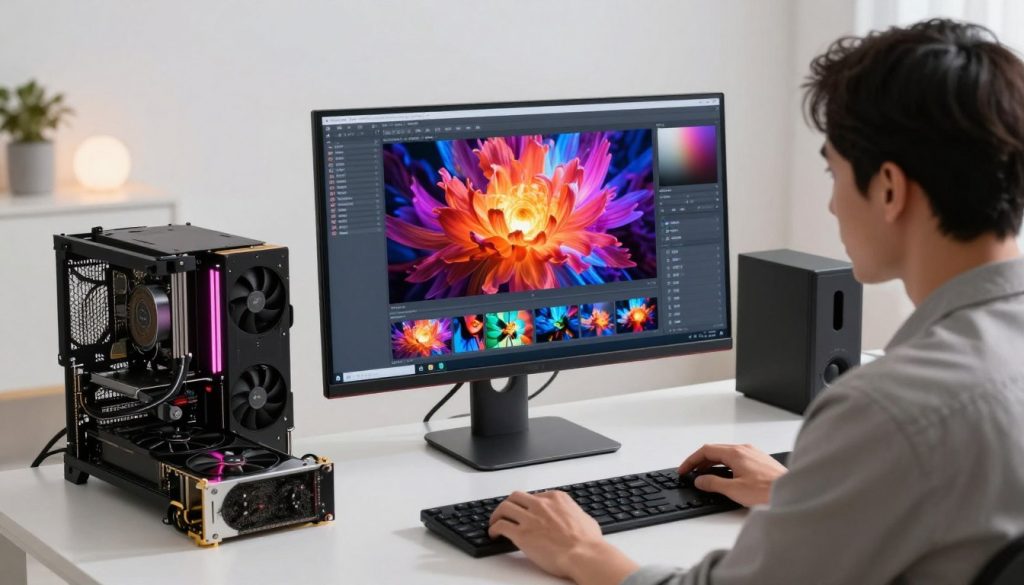
Ever thought your old media could look as clear as today’s high-definition? Many creators face the challenge of grainy, low-quality footage. Luckily, an ai porn 4k upscaler can make your projects look new again.
This guide shows how to use advanced software for professional-grade visual quality. It turns blurry frames into clear, stunning images. We’ll cover everything from preparing files to the final render. This way, every frame is sharp and clear.
Whether you’re restoring old archives or improving digital art, this tool is key. It’s vital for today’s productions.
Key Takeaways
- Understand the core workflow for enhancing low-resolution media.
- Learn how to prepare your source files for optimal processing.
- Discover the benefits of using an ai porn 4k upscaler for sharpness.
- Master the final rendering stages to ensure high-definition output.
- Improve overall visual fidelity across all your digital projects.
Understanding the Technology Behind AI Upscaling
Every clear image has a complex neural network behind it. This network works to fill in missing details. It doesn’t just stretch images; it analyzes them deeply to create high-quality results. This is key for anyone wanting ai porn 4k quality from lower-quality sources.
How Neural Networks Reconstruct Visual Data
Neural networks learn from millions of images to understand how to enhance them. Companies like Topaz Labs have spent over 20 years perfecting these models. They make sure the output looks natural and detailed.
By studying your footage, the AI predicts what’s missing. It fills in the gaps with precision. This is how high-quality ai porn 4k conversion is possible today.
The Difference Between Traditional Resizing and AI Enhancement
Old methods like bicubic or bilinear interpolation use simple math to guess pixel colors. This often results in blurry or pixelated images. AI enhancement, on the other hand, uses intelligent reconstruction to add new data based on learned visual characteristics.
Here’s how these methods compare:
- Traditional Resizing: Stretches pixels, causing blur and losing fine details.
- AI Enhancement: Adds new pixels that sharpen edges and textures.
- Visual Fidelity: AI keeps skin tones and lighting true, unlike standard resizing.
Choosing AI tools means your ai porn 4k output will be clear and detailed. Knowing how this technology works helps you get the best results from your software.
Preparing Your Source Material for Optimal Results
Getting professional results starts before you use your upscaler. The quality of your input data is key. Poor source files can lead to bad results. Check your footage well to give the AI the best data.
Assessing Initial Resolution and Frame Rate
First, check the resolution and frame rate of your clips. AI works best with clear, consistent data. Low resolution can make the upscaler struggle, causing blurry images.
Also, a steady frame rate is crucial for smooth motion. Files with variable rates can cause problems. Always use high-quality files for the best results.
Cleaning Up Source Files Before Processing
Before enhancing, clean your files of digital noise and compression artifacts. These can confuse the AI, leading to unwanted artifacts in your 4K output. A clean file lets the upscaler sharpen textures and edges better.
If your footage looks grainy, try a light noise reduction. Removing compression artifacts early helps avoid digital errors. A clean input ensures your project looks sharp and detailed.
Selecting the Right AI Porn 4K Upscaler Software
Your choice of upscaling software affects the clarity and quality of your content. Picking the right ai porn 4k upscaler is key. It impacts your workflow and the visual quality of your media. By choosing the right tool, you ensure every frame looks sharp and clear.
Evaluating Top-Tier AI Upscaling Tools
The market has many powerful tools for handling visual data. Topaz Video AI and HitPaw Video Enhancer are top choices. They use advanced neural networks to bring out fine details, making them great for ai porn 4k upscaler needs.
“The true value of an upscaling tool lies in its ability to balance aggressive noise reduction with the preservation of natural skin tones and organic textures.”
Comparing Subscription Models Versus One-Time Purchases
Choosing between a subscription or a one-time purchase depends on your goals. Subscriptions offer updates and cloud processing, good for big projects. A one-time purchase is better for those who want to avoid ongoing costs and prefer local processing.
| Software Feature | Subscription Model | One-Time Purchase |
|---|---|---|
| Cost Structure | Monthly/Annual Fee | Single Upfront Payment |
| Updates | Continuous/Automatic | Limited or Paid Upgrades |
| Processing | Cloud & Local Options | Strictly Local |
| Best For | Frequent Professional Use | Budget-Conscious Hobbyists |
The best ai porn 4k upscaler matches your hardware and budget. Think about your project volume before choosing. This ensures you get the most value from your investment.
Configuring Your Hardware for High-Resolution Processing
To make low-resolution footage look sharp in 4K, you need the right setup. A strong upscaler needs a computer that can do lots of math fast. Without the right setup, your work might slow down or even crash.
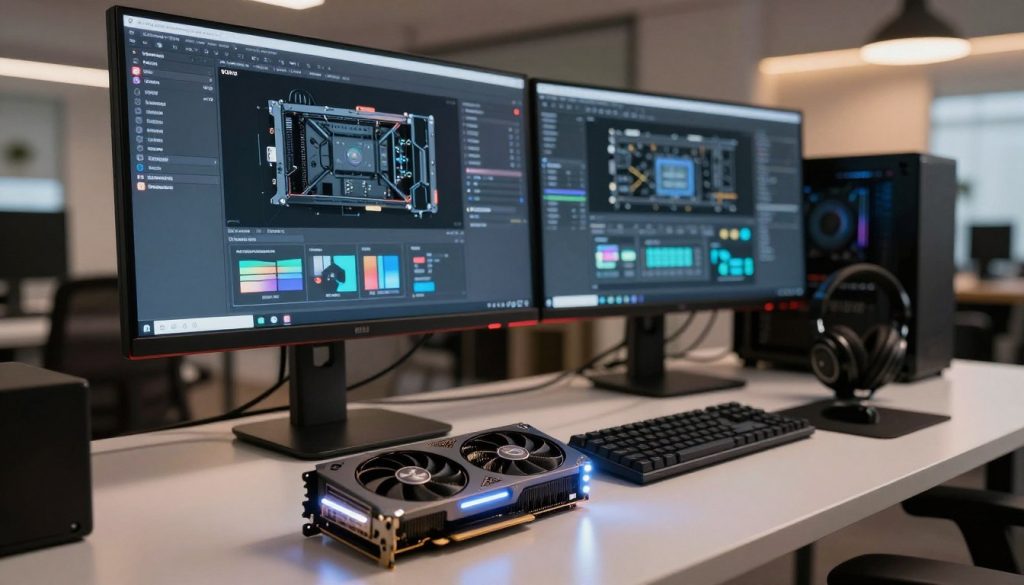
GPU Requirements for Efficient Rendering
The Graphics Processing Unit (GPU) is key for any upscaler that uses AI. Look for GPUs with tensor cores or lots of VRAM. This helps handle the tough job of making frames look better.
For the best results, check out these specs:
- NVIDIA RTX Series: Great for its CUDA core support.
- VRAM Capacity: You’ll need at least 8GB to avoid slowdowns.
- Driver Updates: Keep your drivers current for the latest AI tech.
Optimizing RAM and Storage for Large File Handling
Memory and storage speed are also crucial. Big video files need lots of space while they’re being worked on. If your RAM is too small, your system will slow down.
Here’s how to keep your system fast:
- System RAM: Start with 16GB, but 32GB is better for tough tasks.
- Storage Type: Use an NVMe SSD for fast file access.
- Cache Management: Clean out your cache often to save space.
If your computer isn’t up to par, don’t worry. Cloud services can handle the hard work for you. This way, you can use a top-notch upscaler without spending a lot on new hardware.
Step-by-Step Guide to Importing and Analyzing Files
Starting a high-resolution video project needs a clean workspace. Organizing your files first helps the software work smoothly. This way, you avoid delays and errors.
Setting Up Your Project Workspace
Create a special folder on your main drive to start. Keep your source files separate from where you’ll save your work. This keeps your project organized and prevents mistakes.
Set up your project settings in your software. Make sure they match your video’s frame rate and color space. Being consistent here is key to keep your video looking great.
Utilizing Batch Processing for Multiple Files
Working on big projects can be slow if you do everything by hand. Many AI tools have batch processing. This lets you analyze many clips at once.
Before you start, sort your files by size and type. This organized method helps the AI work right on each file. Your whole collection will look the same.
Batch processing saves you a lot of time. Using these tools lets you focus on making your 4K video look its best. You won’t have to worry about importing files one by one.
Adjusting Upscaling Parameters for Intimate Detail
Getting the most out of your high-resolution projects starts with fine-tuning your output settings. By moving past basic presets, you take full control over how the software handles visual data. This customization ensures your final product is sharp and professional.
Fine-Tuning Sharpness and Edge Detection
Sharpness settings control how the AI defines edges in your frames. Setting them too high can lead to harsh halos around subjects. Start with moderate levels and slowly increase until edges look crisp but natural.
Edge detection algorithms identify contrast shifts to fill in missing pixels. By optimizing these parameters, fine textures stay distinct, not blurred. Always check a small part of your file to ensure edges are clean and well-defined.
Balancing Realism with AI-Generated Smoothing
It’s key to find the right balance between raw detail and AI smoothing to avoid a fake look. You want to keep natural skin texture while removing digital noise. Subtle adjustments to the smoothing filter help keep your render lifelike.
AI-powered frame interpolation can also boost motion. It can increase frame rates up to 60 fps or 120 fps for smoother playback. Combining high-resolution clarity with smooth motion makes your content truly immersive, showing off every intimate detail.
Managing Noise Reduction and Texture Preservation
Keeping the natural look of skin while removing unwanted grain is key in post-production. When you upscale footage for 4K, the engine can make digital noise worse. This can lose the intimate detail that makes your video look real and professional.
Removing Digital Grain Without Losing Skin Texture
Digital grain often hides in shadows or mid-tones. Removing it is crucial for a clean 4K look, but be careful not to lose the intimate detail. You want to soften the noise without blurring pores and contours.
To find this balance, follow these tips:
- Use a low-pass filter to target only the high-frequency noise components.
- Apply temporal denoising to analyze movement across frames, which helps distinguish between grain and actual skin texture.
- Always preview your changes at 100% zoom to ensure that the intimate detail remains sharp and natural.
Applying Selective Denoising Techniques
Selective denoising lets you adjust correction levels for different frame areas. Instead of a global filter, mask out key texture areas. This is crucial for high-fidelity results in close-ups.
By focusing on skin tones, you can use a lighter touch there. Use stronger noise reduction on backgrounds or dark areas. This keeps your final output detailed and polished. Learning these settings will greatly enhance your 4K upscaled projects.
Handling Color Correction and Lighting Enhancements
You can make your content look better by learning about color and lighting. AI upscaling helps with resolution, but the real magic happens with color depth and light balance. These steps make your 4K footage look alive and professional on today’s screens.
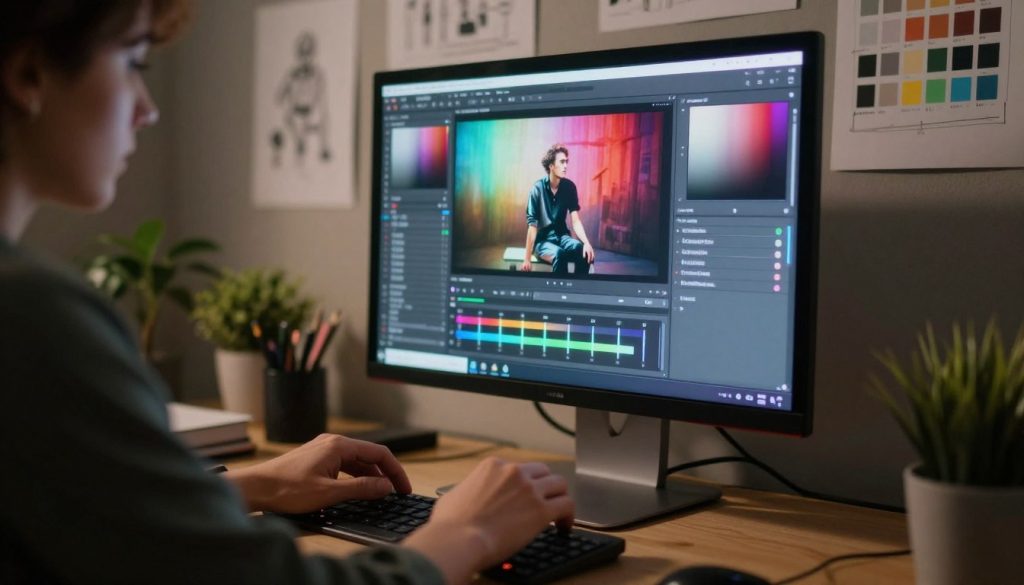
Adjusting Contrast and Saturation for 4K Displays
Working with high-resolution files can be tricky. You want your footage to stand out, but over-processing can make it look fake. Aim for small, natural adjustments to keep things looking real.
Here are some tips for getting your visuals right:
- Use a histogram to check your black and white levels.
- Up the saturation a little at a time to avoid color issues.
- Use contrast curves to add depth without losing shadows.
Correcting Skin Tones and Ambient Lighting
Keeping skin tones consistent is key for a top-notch viewing experience. When you boost resolution, make sure every intimate detail stays true. If the lighting is off, the whole scene can feel unreal.
To get a balanced look, focus on the mid-tones where skin texture is. Avoid over-sharpening, which can mess with these areas. By managing ambient light well, you ensure every intimate detail is shown with accurate color and depth.
If your footage seems flat, try adjusting the white balance to match the original light. This simple step helps keep the intimate detail of your subject while keeping the background lighting natural and engaging.
Executing the Rendering Process and Managing Export Settings
The final stage of your workflow is where all your adjustments come together. This creates a polished 4K video file. Mastering this phase ensures that the high-fidelity results from your AI upscaler are preserved for your audience. Proper export management is key to moving from raw processing to a professional viewing experience.
Choosing the Best Codecs for High-Fidelity Output
Choosing the right codec is crucial for maintaining your footage’s visual integrity. For 4K content, H.265 (HEVC) is often the best choice. It offers superior compression efficiency while keeping fine details intact. If you need a format for further professional editing, consider using Apple ProRes or DNxHR to minimize generation loss.
Avoid using outdated codecs that may introduce compression artifacts or color banding. By choosing a modern, high-efficiency codec, you ensure your upscaler output remains sharp and vibrant on all compatible displays.
Managing Bitrate and File Size Constraints
Balancing visual quality with file size is a critical skill for any content creator. A higher bitrate generally leads to better quality but results in larger files. You should aim for a variable bitrate (VBR) setting to optimize space without sacrificing detail in complex scenes.
Use the following table to help determine the best export settings for your specific needs:
| Codec | Best Use Case | Quality Level | File Size |
|---|---|---|---|
| H.264 | Web Streaming | Moderate | Small |
| H.265 (HEVC) | 4K Distribution | High | Medium |
| ProRes 422 | Professional Editing | Very High | Large |
| DNxHR | Archival Storage | High | Very Large |
Always perform a short test render before committing to a full-length export. This practice allows you to verify that your chosen bitrate settings effectively handle the textures and lighting enhancements applied by your upscaler.
Troubleshooting Common Artifacts and Blurring Issues
Fixing your output is key to mastering high-definition enhancement. Even top software can have visual errors that need your help. By spotting these issues, you keep your ai porn 4k content looking sharp and professional.
Identifying and Fixing Ghosting Effects
Ghosting shows as a faint image trail behind moving subjects. It’s often due to frame interpolation settings. When software can’t accurately show movement between frames, ghosting happens. Here’s how to fix it:
- Lower the interpolation intensity in your software settings.
- Check if your source file has a variable frame rate and convert it to a constant frame rate first.
- Turn off motion smoothing features if ghosting still shows in your ai porn 4k project.
Correcting Over-Processed Facial Features
Over-processing can make skin look unnatural or facial features distorted. This happens when AI tries too hard to enhance details not in the original footage. To fix this, adjust your workflow:
Start by reducing the denoising strength to keep skin texture natural. If the face still looks fake, mix the AI-enhanced layer with the original at lower opacity. This mix often gives the best look for ai porn 4k content.
Always check small video parts before a full render. This way, your ai porn 4k output will be stunning and free from digital flaws.
Best Practices for Maintaining File Integrity and Privacy
Working with sensitive 4K files means data security is key. High-resolution media often has personal or proprietary info that needs strict protection measures. Keeping your content private is as crucial as the quality of the final product.
Securing Your Processed Content
Start by using strong encryption protocols. Industry-standard encryption tools help keep your files safe from unauthorized access. Storing files on encrypted drives adds more protection against data breaches.
“Data security is not a product, but a process that requires constant vigilance and the right tools to protect your most valuable digital assets.”
Make sure your cloud backups or external storage use end-to-end encryption. When sharing with collaborators, use secure file transfer services with password protection and expiration links. These steps greatly lower the chance of data leaks.
Managing Local Storage and Data Deletion
Managing local storage is crucial for file integrity and system performance. Large 4K files take up a lot of space, causing fragmentation and slower speeds. Create a consistent organization system to keep your workspace tidy and efficient.
Having a regular data deletion policy is also key for privacy. After a project is done and archived, delete temporary files and intermediate renders. This frees up storage and reduces the risk of data exposure on your machine.
Think about using automated tools to monitor storage and find redundant files. By keeping a disciplined approach to your digital space, you protect your privacy and keep your hardware ready for future projects.
Conclusion
Learning to enhance high-resolution images turns your digital collection into top-notch assets. You now know how to improve your media with modern AI tools. This skill lets you go beyond what’s usual.
Doing well in this area needs patience and a keen eye for detail. You must mix automated software with your own touch to keep each image true to itself. This way, your work stays real but looks sharp like 4K.
Tools like Topaz Video AI or HitPaw Video Enhancer do a lot of the work for you. Your job is to adjust these tools to fit your project’s needs. With practice, you’ll find the right mix of clarity and detail.
Use these skills in your next project. Try different settings to see how they change your file size and look. Your work will stand out in a world that values high definition.
Show off your work to your followers to highlight the power of upscaling. Your dedication to quality will make your future projects even more impactful. Begin your next project today and see the difference precision brings.
FAQ
How does an AI upscaler differ from traditional video resizing methods?
Traditional resizing stretches pixels, leading to blurry images. An AI upscaler uses neural networks to create new pixels. This makes your ai porn 4k content sharp and clear, unlike distorted images.
Which software should I choose for the best 4K enhancement results?
Look for tools with deep-learning capabilities. Topaz Video AI 그리고 AVCLabs Video Enhancer AI are great choices. Decide if a subscription or a one-time purchase fits your needs.
What hardware specifications do I need to process high-resolution video efficiently?
High-resolution video is hard on your system. A high-end NVIDIA GeForce RTX GPU is best. Also, have at least 32GB of RAM and fast NVMe SSD storage for smooth rendering.
How can I bring out the most intimate detail in my upscaled videos?
Fine-tune sharpness and edge detection to highlight textures. Use AI-powered frame interpolation for smoother motion. This makes scenes more realistic.
How do I remove digital noise without losing natural skin textures?
Use selective denoising to target grain while keeping skin details. This avoids the “wax figure” look, making subjects look natural.
What are the best export settings to ensure high-fidelity output?
Use H.265 (HEVC) or ProRes codecs for quality. Manage your bitrate to balance quality and file size for ai porn 4k playback.
What should I do if I encounter ghosting or artifacts after upscaling?
Ghosting might mean your frame interpolation is too aggressive. Try reducing its sensitivity. Adjust “Recover Details” or “Face Refinement” sliders for over-processed faces. Manual tweaks are often needed.
How can I ensure my private content and data remain secure during processing?
Process files locally and use encryption for sensitive media. Choose cloud services with strict privacy policies. Regularly delete data and organize your workspace to keep your ai porn 4k production secure.